Open Doors, Open for Business: Why Accessibility Is One of the Best Investments You Can Make
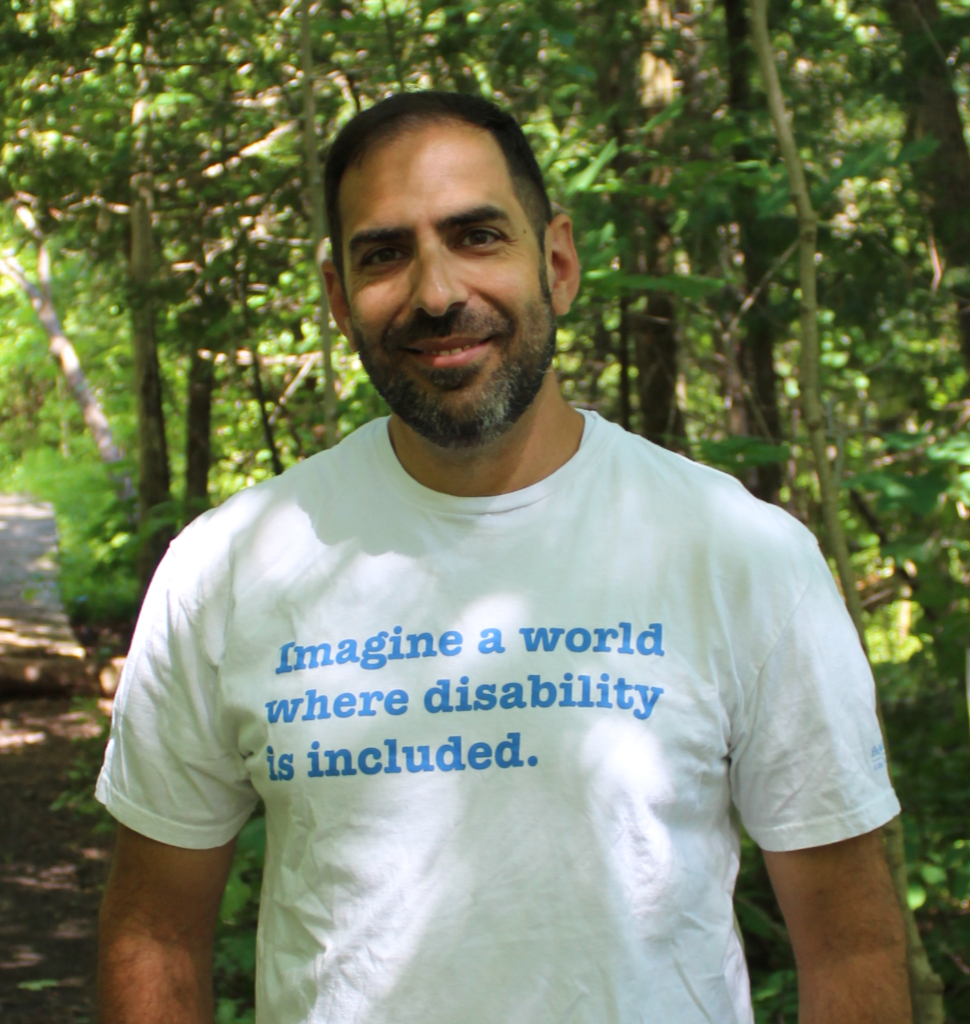
Imagine you've just opened a beautiful new shop in Town. The shelves are stocked. The sign is up. You're ready for customers.
Then a woman pulls up in her car. She uses a wheelchair. She looks at your front step, just one step, maybe four inches high, and she drives away. Not because she doesn't want to shop with you. But because she can't get in.
That's a lost customer, who tells their family and friends. And it happens more often than most business owners realize.
The good news is that accessibility does not have to be complicated, overwhelming, or expensive. When you get it right, it is genuinely good for your bottom line.
So, What Is Accessibility?
Accessibility means making sure that everyone, regardless of their physical ability, vision, hearing, or cognitive differences, can seamlessly use your space, your services, and your information.
But here's something many people don't realize: disability isn't always visible, and it isn't always permanent.
Think about the last time you had a broken arm and couldn't open a heavy door easily. Or a migraine that made it hard to read small text. Or anxiety that made a loud, crowded store feel overwhelming. These are temporary and invisible disabilities, and most of us will experience some form of them during our lives. In fact, disability is something that can happen to any of us at any time, through illness, injury, or aging.
This is why accessibility benefits everyone. When a curb cut was first built into a sidewalk to help wheelchair users, it turned out that parents with strollers loved it. Delivery workers with hand carts loved it. Older adults with walkers loved it. One simple change helped a lot of people.
That's the heart of accessibility. When we design with everyone in mind, we create better experiences for everyone.
The Law: What You Need to Know About the A.O.D.A.
In Ontario, there is a law called the Accessibility for Ontarians with Disabilities Act, or the A.O.D.A. for short. It was passed in 2005 with a clear goal: to make Ontario fully accessible by 2025. While that target milestone has passed, the work of building an accessible province is more active, and legally binding, than ever.
The A.O.D.A. covers five core areas:
Customer Service: How you serve and interact with people with disabilities
Information and Communications: How you share information (websites, signs, documents)
Employment: How you hire and support your team
Transportation: How people get around
Design of Public Spaces: The physical spaces we build and maintain
The A.O.D.A. is backed by the Ontario Human Rights Code, which says that every person has the right to equal treatment when accessing services and facilities. Together, these laws set a clear expectation: people with disabilities deserve the same quality of experience as everyone else.
You Need to Comply, and You Need to Report
The A.O.D.A. is not optional. Businesses and organizations in Ontario are legally required to meet accessibility standards, and many are required to file an accessibility compliance report with the Provincial government on a regular basis. Failing to comply can result in fines and, more importantly, can expose your business to complaints under the Ontario Human Rights Code.
The good news is that compliance doesn't have to feel like a burden. Most of the requirements for small businesses are straightforward, low-cost, and really just come down to good customer service. If you're unsure where your business stands, resources are available to help you get there.
Why It's Good for Business
Let's talk numbers for a moment.
Roughly one in four Canadian adults identifies as living with a disability. However, researchers and advocates agree the true number is much higher, as many people do not formally identify as having a disability despite experiencing limitations.
That number also rises sharply as people age. If I ever told my grandfather he was disabled, he would have told me otherwise, right before he hit me with his cane. In a tight-knit community like King Township, where family, heritage, and retirement are central, accessibility directly impacts a massive portion of the local market.
When you add family members, caregivers, and friends who often accompany people with disabilities, the spending power of this group in Canada is estimated at over $55 billion per year.
That's not a niche market. That's your neighbours.
Consider the story of a small café owner in a nearby town who added a ramp to her entrance and made sure her menu was available in large print. Within a month, she had gained a loyal new customer, an older gentleman who had simply never been able to come in before. He came in every Tuesday. He told his friends. His friends told their friends.
"I didn't do it for the business," she said. "I did it because it was the right thing. But it absolutely helped the business."
Myth Busting: The Real Cost of Access
One of the biggest myths about accessibility is that it costs a fortune.
Free Changes: Greeting a customer using a mobility aid with the same warmth as anyone else. Training your staff to ask, "How can I help you today?" rather than making assumptions. Keeping your retail aisles clear of boxes or promotional displays.
Low Cost Changes: Investing in a portable ramp, which often costs just a few hundred dollars, printing large text menus or brochures, or making minor formatting adjustments to your website so it is screen reader friendly.
Major Capital Upgrades: Larger renovations, like widening a doorway, do cost more. But many of these upgrades qualify for government grants and tax incentives. The Ontario government and federal programs exist to help small businesses cover the cost of accessibility improvements.
And here's the thing: these improvements last. A ramp installed today serves customers for decades.
Real People, Real Stories
Meet Susan. She is blind and navigates the world with the help of her guide dog, Jake. Susan is fiercely independent. She shops locally, eats at local restaurants, and is proud to support businesses in her community.
Unfortunately, she still faces hurdles. "Sometimes I walk into a business and the staff panic," she says. "They tell me the dog is not allowed. It is embarrassing, and frankly, it is illegal."
Under the A.O.D.A., certified service animals like Jake must be permitted in public spaces.
"All I want," Susan says, "is to come in, be treated like any other customer, and give you my business."
Then there's Maria, a mother of three whose youngest son is on the autism spectrum. Loud music, bright flashing lights, and crowded spaces are difficult for him. When a local grocery store in her area introduced a quiet shopping hour on Sunday mornings, lower lights, no music, a calmer experience, Maria became one of their most loyal customers.
"I cried the first time we shopped there," she shared. "It was the first time our family felt truly welcome."
These aren't complicated solutions. They're thoughtful ones.
Accessibility Is Also About Who You Hire
Accessibility doesn't stop at your front door. It extends to your team as well.
People with disabilities are skilled, dedicated, and ready to work. Yet unemployment rates among people with disabilities in Canada remain significantly higher than the national average. That's not because of a lack of ability. It's often because of a lack of opportunity, and sometimes a lack of awareness among employers.
Consider what you might be missing. A candidate who is Deaf may excel in written communications and digital organization. A team member with a visual impairment might possess incredible analytical skills. Providing a flexible schedule to an employee managing a chronic illness often yields some of the most dedicated, highly productive staff you will ever hire.
Building an accessible hiring process is not just an A.O.D.A. requirement; it is a clear competitive advantage in a tight labor market.
So Where Do You Start?
You do not have to overhaul your entire business overnight. Start with these four simple steps:
Walk through your space as a customer. Is there a step at your entrance? Are your aisles wide enough for a wheelchair or walker? Is your signage clear and high contrast?
Review how you communicate. Is your website easy to read on a phone? Do you have print materials available in larger text if someone asks? Can someone contact you by email or text, not just by phone?
Train your team. Ensure your staff understand the basic rules around welcoming service animals and feel comfortable asking customers how they can best accommodate them. You may be surprised by how simple the answers are.
Reach out for help. You do not have to figure this out alone. The King Township and York Region offer resources for local businesses navigating accessibility requirements. Organizations like the C.N.I.B. (Canadian National Institute for the Blind), the Rick Hansen Foundation, Ontario Government and March of Dimes Canada also offer practical guides tailored to small businesses.
A Final Thought
Accessibility is not about ticking boxes on a government checklist. It's about the kind of community we want to be.
King Township is a place built on neighbourliness, on knowing the people who live and work here, on looking out for each other. When we make our businesses more accessible, we're living those values. We're saying: you belong here. Come on in.
That's worth more than any sign in a window.
And yes, it's good for business too.
For more information on provincial compliance requirements, and accessing free resources for small businesses, visit ontario.ca/accessibility.
Comments